Pilbara Strike (1946) On this day in 1946, ~800 Aboriginal agricultural workers initiated the Pilbara Strike
## Pilbara Strike (1946)
### Wed May 01, 1946
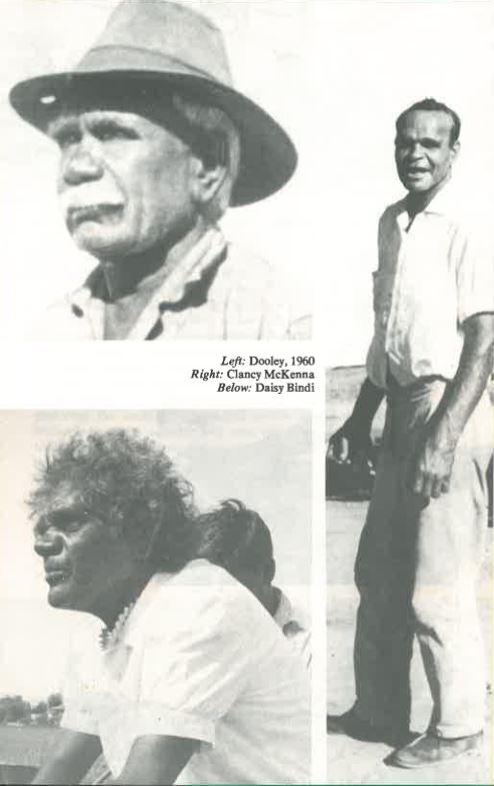
Image: *"The Black Eureka" by Max Brown 1976, pg 115 [unionswa.com.au], showing three strike leaders: Dooley, Clancy McKenna, and Daisy Bindi*
---
On this day in 1946, 800 Aboriginal agricultural workers initiated the Pilbara Strike. The strike lasted for more than 3 years before improved working conditions were won, becoming one the longest strikes in Australian history. Today, the strike is considered a major event in the Aboriginal land rights movement.
The Pilbara Strike took place in the context of slave-like conditions - workers were denied cash wages, paid in supplies of tobacco, flour and other necessities, and those who attempted to escape were whipped and hunted down by police.
On May 1st, 1946, approximately 800 agricultural workers walked off their pastoral stations in the Pilbara region of Western Australia, setting up strike camps. The date of May 1st was chosen not only because it was International Workers' Day but also because it was the first day of the shearing season.
The strike lasted for more than 3 years, and spread beyond the Pilbara region. Strikers faced severe police repression, with leaders such as Dooley Bin Bin, Clancy McKenna, Jacob Oberdoo, and Don McLeod being arrested on multiple occasions. Aboriginal women played a vital role in the strike, both as workers and in establishing strikers' camps. Daisy Bindi, a Nyangumarta woman, personally led a walk-off of 96 workers at Roy Hill Station.
The strikers sustained themselves with their traditional bush skills, hunting kangaroos and goats for meat and skins. They also developed some cottage industry which brought cash payment, such as selling buffel grass seed in Sydney, the sale of pearl shell, and in surface mining.
By August 1949, the Seamen's Union had agreed to blackban wool from stations in the Pilbara onto ships for export. On the third day after the ban had been applied, McLeod was told by a government representative that the strikers' demands would be met if the ban was lifted. Weeks after the strike ended and the ban lifted, the government denied making any such agreement.
After the strike concluded, many Aboriginal people refused to go back to working in their old roles in the pastoral industry. Some were able to pool their funds from surface mining and other cottage industry to buy or lease stations, including some they had formerly worked on, running them as cooperatives.
Jacob Oberdoo was later awarded the British Empire Medal, but declined to accept it. In 2010, four streets in the Canberra suburb of Bonner were named after strike leaders: Clancy McKenna Crescent, Dooley Bin Bin Street, Peter Coppin Street, and Don McLeod Lane.
---
- Date: 1946-05-01
- Learn More: [pilbarastrike.org](https://pilbarastrike.org/), [en.wikipedia.org](https://en.wikipedia.org/wiki/1946_Pilbara_strike).
- Tags: [#Labor](/search?q=%23Labor&type=Posts&listingType=All&page=1&sort=New), [#Indigenous](/search?q=%23Indigenous&type=Posts&listingType=All&page=1&sort=New).
- Source: [www.apeoplescalendar.org](https://www.apeoplescalendar.org/calendar/events/pilbara-strike-1946)
### Wed May 01, 1946

Image: *"The Black Eureka" by Max Brown 1976, pg 115 [unionswa.com.au], showing three strike leaders: Dooley, Clancy McKenna, and Daisy Bindi*
---
On this day in 1946, 800 Aboriginal agricultural workers initiated the Pilbara Strike. The strike lasted for more than 3 years before improved working conditions were won, becoming one the longest strikes in Australian history. Today, the strike is considered a major event in the Aboriginal land rights movement.
The Pilbara Strike took place in the context of slave-like conditions - workers were denied cash wages, paid in supplies of tobacco, flour and other necessities, and those who attempted to escape were whipped and hunted down by police.
On May 1st, 1946, approximately 800 agricultural workers walked off their pastoral stations in the Pilbara region of Western Australia, setting up strike camps. The date of May 1st was chosen not only because it was International Workers' Day but also because it was the first day of the shearing season.
The strike lasted for more than 3 years, and spread beyond the Pilbara region. Strikers faced severe police repression, with leaders such as Dooley Bin Bin, Clancy McKenna, Jacob Oberdoo, and Don McLeod being arrested on multiple occasions. Aboriginal women played a vital role in the strike, both as workers and in establishing strikers' camps. Daisy Bindi, a Nyangumarta woman, personally led a walk-off of 96 workers at Roy Hill Station.
The strikers sustained themselves with their traditional bush skills, hunting kangaroos and goats for meat and skins. They also developed some cottage industry which brought cash payment, such as selling buffel grass seed in Sydney, the sale of pearl shell, and in surface mining.
By August 1949, the Seamen's Union had agreed to blackban wool from stations in the Pilbara onto ships for export. On the third day after the ban had been applied, McLeod was told by a government representative that the strikers' demands would be met if the ban was lifted. Weeks after the strike ended and the ban lifted, the government denied making any such agreement.
After the strike concluded, many Aboriginal people refused to go back to working in their old roles in the pastoral industry. Some were able to pool their funds from surface mining and other cottage industry to buy or lease stations, including some they had formerly worked on, running them as cooperatives.
Jacob Oberdoo was later awarded the British Empire Medal, but declined to accept it. In 2010, four streets in the Canberra suburb of Bonner were named after strike leaders: Clancy McKenna Crescent, Dooley Bin Bin Street, Peter Coppin Street, and Don McLeod Lane.
---
- Date: 1946-05-01
- Learn More: [pilbarastrike.org](https://pilbarastrike.org/), [en.wikipedia.org](https://en.wikipedia.org/wiki/1946_Pilbara_strike).
- Tags: [#Labor](/search?q=%23Labor&type=Posts&listingType=All&page=1&sort=New), [#Indigenous](/search?q=%23Indigenous&type=Posts&listingType=All&page=1&sort=New).
- Source: [www.apeoplescalendar.org](https://www.apeoplescalendar.org/calendar/events/pilbara-strike-1946)